


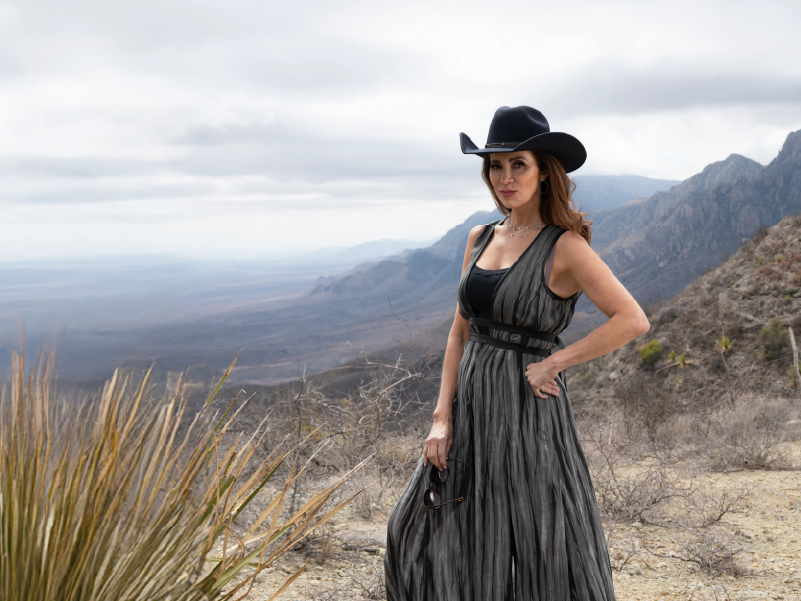
How did you get into the world of Mexican spirits?
My mother was a professional basketball player, and then she had children and became an economist. She specialized in the arid zones of Mexico, the desert areas, which make up about 35 percent of the country. As a kid, I would go with her. I’m from the north of Mexico, so I’d go into the desert where she was trying to figure out how to maximize the economic value of a place where nothing was growing except the sotol plant.
I remember watching my mother explore ways that industry could take form. Then, around seven years ago, I slowed down my drinking and realized I wasn’t alone. People were drinking less, but better, and I thought, wait, I know better. The sotol I grew up with is better because it’s only made of plant and water.
A sotol plant takes 15 years to grow. To give you a sense, agave takes about seven years, and grapes take one year. It’s really Mother Nature fighting and struggling to give you the very best. The more the plant suffers, the better the liquid is.
I thought, wait, I know sotol. I don’t know why the category isn’t better known, but I’m a marketer. I know how to make noise, and I know how to build brands. I was motivated not only because I wanted to drink better and be more intentional about what I consume, but because I realized that if sotol could do for the north of Mexico what tequila has done for the south. Sotol could create jobs, bring prosperity, and create opportunity in a region that borders the United States. To me, that felt like a win-win for everyone.
Do you think that your background has influenced the way you run your company and your brand?
One million percent. It is the brand. I don’t have a brand that has social responsibility or sustainability on the side, it’s the center of the brand. I’m aware that consumers today want authentic, sustainable, organic, artisanal, and additive-free products. I’m not going to exploit my country and leave. I’m going to be respectful to the communities where we operate, and consumers are paying attention to all of that. They want to trace the story. They want to know where the product comes from and how they connect with the people behind it.
The story of sotol is one of resilience. Just imagine that you’re that sotol plant that has to survive extreme weather conditions every day—it’s so hot, it’s so cold, there’s almost no water, and yet it survives. At the end of that journey is a story of celebration, where you can look back and say, “Wow, look how far I’ve come. It was a long journey, but I still have more to give.” That’s the story I want to connect with because I think it’s a beautiful story for people who are always striving for what’s next.
For readers who have never heard of sotol before, how would you explain what sets it apart from a tequila or mezcal?
It’s a healthier, leaner, and more elegant tequila, let’s put it that way. It’s a different category. The process is similar, but the plant is so different that the result is a distant cousin. If agave is for the south of Mexico, sotol is for the north, and it takes twice as long to grow, which gives it that character.
The main difference between tequila, mezcal, and sotol is the plant. It struggles, it suffers, and it works for you, so humans don’t have to. Sotol is Mother Nature giving the best she has for 15 to 20 years, so you don’t have to add any toxins, additives, or anything. It’s literally just three ingredients: plant, water, and natural yeast. Sometimes I describe it jokingly: If a good tequila had a baby with a good mezcal, it would probably taste like sotol, but with fewer calories.
How is sotol different in the way it is harvested?
The process is pretty similar. Imagine an agave plant; it’s probably three feet tall, chunky, and short. The jimador, the person who cuts the leaves, takes the heart of the plant, which is called the piña. Now imagine that same process with sotol. The plant is 11 feet tall, and it grows high in the Sierra. You have to walk 10 hours to get to one plant here and another plant over there. It’s not a commodity. It’s very scarce, very rare. It’s the treasure of the desert.
Once you harvest the sotol plant, you cut the leaves, remove the heart, and from there the process is similar. You cook it, crush it, and distill it twice. That’s how you get the liquid. The big difference is the plant. It’s what makes sotol so distinct. Same process, different plant, better product.
How does it make you feel and taste in comparison to a tequila or a mezcal?
Sotol comes from the same family of plants as tequila and mezcal, so it’s an upper. It’s a spirit that allows you to feel happy. It will never give you a headache because it has no sugar. You don’t have to put sugar into sotol, just like you don’t have to put sugar on a mango, it’s already sweet. People are moving away from darker spirits, like rum, and toward white spirits like tequila, mezcal, gin, and vodka. Of all the white spirits, sotol is the leanest. It’s almost like the bikini drink.
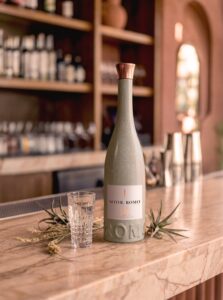
The big difference with our brand is that Sotol Romo is 100 percent sotol from a single variety called Cedrosano. It’s pure, ultra-premium, and focuses on offering the healthiest option. When I look at this bottle, it reminds me of my sunsets and sunrises in the desert where I grew up. The colors reflect the Sierra Verde and the orange desert, and the copper cap reminds me of Copper Canyon in the Sierra Madre. It’s a reflection of the desert.
What responsibility do you feel in representing the history and traditions behind Sotol?
A massive, massive, massive responsibility. I have a background that’s always been about working toward bigger goals. One of the things I’ve been able to do throughout my career is gather voices, paint a dream, make people believe in it, and then act on it. I started calling all the sotol producers because I’m not doing this only for my brand—I’m doing it for the category. The dream is that if we mainstream sotol and make it something everybody loves, it’s going to be good for everyone. It’s good for Mexico because it will create abundance and opportunity. It’s good for the United States because it’s connected to a region that’s dry and arid. And it’s fantastic for consumers because they’ll discover one of the best spirits Mexico has.
My responsibility is not only building a brand and selling a product, but educating people about it and positioning it correctly. This is the treasure of the Sierra Madre, the diamond of the desert of Mexico, and it should be treated with a lot of respect—for the people who produce it and for the people who enjoy it. Yes, I’m curious about how you introduce a centuries old spirit into a new audience without losing what makes it authentic.
It seems like every celebrity these days has a tequila brand. What are your thoughts on that?
I have no problem with celebrities creating products if they’re going to do it right and do it with respect for the communities where they operate. What I do have a problem with is when people come into my country, exploit it, and leave. We’ve seen complete fields of agave cut down without thinking about the fact that it takes seven years for those plants to grow. Entire communities lost their livelihoods because there was no respect for the people or the land. If you’re going to build a brand, you have to do it authentically and with respect.
What cocktails or drinks are best made with sotol?
The best way to think about sotol is to substitute it anywhere you’d normally use tequila or mezcal. A margarita is made with tequila, a mezcalita is made with mezcal, and a sotolita is made with sotol. It’s delicious, and because it has no sugar, it makes for the skinniest margarita. Personally, I love it neat because it’s so lean. Why add the calories? I also love it on the rocks, with soda, or in a sotolita. A Paloma is fabulous, too. Anything citrus pairs well with sotol. It’s also wonderful with food because it opens your palate. It’s great as the first pour. It’s perfect with crudo, fresh oysters, tuna tartare, and all those fresh summer dishes. But if you’re trying it for the first time, I’d recommend starting with a 100 percent sotolita.
What makes Sotol Romo different from other sotol brands?
It’s the ultra-premium of the category. Everything in Sotol Romo is premium. The plant itself is 100 percent, and you have to pay attention to that. When you see a bottle that only says “sotol,” it can mean it’s mixed. But when the label says 100 percent, it means it’s puro. Ours is not only puro, but it’s made from the highest-quality variety of the sotol plant, called Cedrosano.
Everything in this bottle is high quality. The ceramic bottle, the label, the copper cap. The cap is made of copper, so when you take it and press it on your ice, it leaves the mark of the sotol plant. We’re intentional about every single detail: the bottle, the liquid, the cap, the label, the marketing, and the experience.
One very distinctive part of Sotol Romo is the team behind it. We have experts in marketing, communications, and the spirits industry who came together with one goal—to open the market, educate people, and create excitement, not just for our brand but for the entire sotol category.
Where can you find Soto Romo this summer?
We launched on the Fourth of July in 25 accounts across New York and the Hamptons, only the best of the best. You’ll find us at places like Nobu, The Ritz-Carlton, José Andrés’ restaurants, and Pierre’s in Bridgehampton.
We’ll also be hosting more than 50 events this summer, including 30 throughout the Hamptons. We’ll be at many of the season’s galas, charities, and private events, and we’re proud to be one of the partners of the Parrish Art Museum this year. One thing I’m especially excited about is the opening of the Sotol Romo Barn in Sagaponack. It’s going to be our tasting room, so if you’re on your way to the Sagaponack General Store, you can stop by and experience Sotol Romo for yourself.
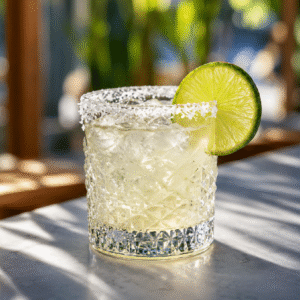
How to make a Romo Sotolita
INGREDIENTS
2 oz Sotol Romo Blanco
¾ oz lime juice
¼ oz light agave nectar
Pinch of salt
Lime wedge
DIRECTIONS:
Add all ingredients to a shaker tin with ice and shake vigorously. Strain over fresh ice into a rocks glass and garnish with a lime wedge.
For more information, visit sotolromo.com.
Audrey Glass